.post-body img, .entry-content img { max-width: 100% !important; height: auto !important; }

Search this Blog

Showing posts with label Scientists. Show all posts

Michael Faraday

 Science / Chemist & Physicist

Brief biography of Michael Faraday, considered 'father of electricity', 18th century English physicist and chemist, the greatest experimental scientist in history, famous for his breakthroughs in electricity and electrochemistry. 

Faraday is considered the greatest experimental scientist in history. He discovered the first electric generators and transformers, electromagnetic rotations, electromagnetic and magneto-electric inductions that produced the first electrical generator and transformer, diamagnetism, magneto-optical effect, and the laws of electrolysis.    

The Poor Boy  

Michael Faraday was born on September 22, 1791, in Newington Butts, south London, to a poor working-class family, James, a blacksmith, and Margaret Faraday. He was five, when the family moved to Jacob's Well Mews, near Manchester Square. When he was 19, his father died, leaving his mother to support the family.

The Faraday family belonged to the Sandemanians, a religious sect that believes in the literal truth of the Bible. Faraday maintained a separation between his religion and his science, both important to him.

Bookbinding Apprentice

Aged thirteen, he started work as an apprentice of George Riebau, a bookbinder and bookseller. He was a keen reader, a later influence in his life. He joined a group of young men called City Philosophical Society. They attended lectures and exchanged ideas on scientific matters.

In 1812, Riebau showed to Mr. Dance, one of his customers, some of Faraday's notes. Mr. Dance, a member of the Royal Institution of London, was so impressed that he bought Faraday tickets for a series of lectures at the Royal Institution. This time, Faraday had finished his seven-year apprenticeship with Riebau and had become a qualified bookbinder.

Davy's Apprentice     

The lectures Faraday attended at the Royal Institution were given by the famous scientist Sir Humphry Davy. Faraday took notes during the lectures. Later, he wrote and sent to Davy a copy of his notes. Davy was impressed. When Davy was temporarily blinded from a chemical experimental explosion he took Faraday as his amanuensis. Eventually, he was hired on March 1, 1813, as a replacement of Davy's assistant who was dismissed for misconduct.  

When Davy went on a tour with his wife, he took Faraday with him and introduced him to the leading scientist including Volta and Ampère. Faraday's only problem was that Davy's wife treated him like a servant.

Faraday the Experimenter, Lecturer, Scientific Writer

On return to London after 18 months, Faraday began his experiments alongside working as Davy's assistant. He began his lectures at the Philosophical Society and published his first scientific paper, the Analysis of Native Caustic Lime of Tuscany.  

The Analytical Chemist

In 1820, Faraday produced the first known compounds of carbon and chlorine. Inspired with the advances in electricity and magnetism by Aragó and  Ampère, and Oersted's magnetic effect of an electric current, Faraday further experimented on the subject. The following year, he published "On some new Electro-Magnetical Motions, and on the Theory of Magnetism" in the Quarterly Journal of Science.  

In 1821 Faraday married Sarah Barnard, also a member of the Sandemanian church. The Faradays lived in the Royal Institution.

More Scientific Discoveries

For the next twenty years since 1821, Faraday made one scientific discovery after another. He made his first electrical discovery, the electromagnetic rotations. He worked on the liquification of gases, discovery of benzene, process of electrolysis, the laws of electrochemistry, and devised new scientific words.  

Awards and Recognition

In 1824, Faraday was elected Fellow of the Royal Society of which Davy opposed but over-ruled. An excellent lecturer, Faraday instituted the celebrated series of Friday evening discourses. He was professor of chemistry at the Royal Military Academy at Woolwich. He was in demand to give practical advice and commercial analysis.

In 1832, Faraday received more honours: honorary degree from the University of Oxford, Fullerian Professor of Chemistry at the Royal Institution, the Royal Medal and the Copley Medal, both from the Royal Society. In 1836 he was made a Member of the Senate of the University of London.  

Final Years

By mid-1850's, now spent, Faraday continued his children's Christmas lectures, including the chemical history of the candle. In 1864, he declined the Presidency of the Royal Institution, and gracefully retreated from the scientific world. Queen Victoria gave him a Grace and Favour House at Hampton Court, where he died on August 25, 1867.

Beyond Faraday

Faraday's work for the magnetic field concept formed the foundations of the mathematical description of the electromagnetic theory taken up by James Clerk Maxwell after Faraday's death.


Resources:

Chambers Biographical Dictionary, edited by Una McGovern, Chambers, 2002

Ellyard, David. Who Discovered What When. New Holland, 2005

Farendon, J. and Woolf, A., Rooney, A. and Gogerly, L.. The Great Scientist. Capella, 2005

(Note: I originally published this article at Suite101.com, 21 May 2008. / Tel) 


(c) September 2015. Tel. Inspired Pen Web. All rights reserved. 

Niels Bohr

Science / Great Scientists

Danish physicist, philosopher, teacher, and humanist, known for atomic structure with electrons orbiting nucleus  

Brief biography of Niels Bohr, best known for his 'solar system' model of atomic structure, the foundation of quantum mechanics.    
  

Niels Bohr (1885-1962), Danish physicist, was one of the greatest physical chemists of the 20th century, famous for his contribution to quantum physics and atomic structure that won him Nobel Prize in Physics in 1922. He proposed the 'Solar System' model of atomic structure in which electrons orbit the central nucleus.  He married Margrette Norlind in 1912. They had six sons, the fourth, Aage Bohr, followed in his footsteps and won his own Nobel Prize in 1975.  

Early Life
Niels Henrik David Bohr was born on October 7, 1885, in a mansion owned by his maternal grandmother of influential Jewish banking family. His father, Christian Bohr, was a professor of physiology at Copenhagen University. The children grew up in an atmosphere in which pursuit of knowledge, intellectual discussions and culture were greatly encouraged. He loved football.

A Hopeful Beginning
Bohr studied at Copenhagen University and did experimental work by using his father's physiology laboratory since there was no physics laboratory at that time. In 1906, he won the Gold Medal from the Royal Danish Academy of the Sciences for his measurement of the surface tension of water.
On 1911, Bohr completed his PhD and went to England the same year. In Cambridge he met Ernest Rutherford, who just published his discovery that most of the mass of an atom is in its center, the nucleus. Bohr joined Rutherford's team in Manchester working on the structure of the atom. Rutherford became his role model and lifelong friend. 

John Bardeen

Science / Scientist Datebook: May 23 

Physicist and electrical engineer.  Nobel Laureate in Physics twice. 


John Bardeen (May 23, 1908 – January 30, 1991), was born in Madison,  Wisconsin. An electrical engineer and physicist, he was the only person to have won the Nobel Prize in Physics twice: first in 1956 with William Shockley and Walter Brattain, for their researches on semiconductors and their discovery of the transistor effect,  and in 1972 with Leon N Cooper and John Robert Schrieffer, for a fundamental theory of conventional superconductivity known as the BCS Theory. 

The transistor revolutionized the electronics industry, and made possible the development of almost every modern electronic device, from telephones to computers to missiles.

Newton's Laws of Motion

Brief insight of Newton's laws of motion.

Any science student or follower of Sir Isaac Newton (1643-1727) would know that his 3 laws of motion were framework for the mechanics of science. Newton calculated that the force of the attraction (gravity) between 2 objects is equal to the mass of each object multiplied by a gravitational constant and divided by the square of the distance between the objects.

What it means is that larger masses exert the stronger attraction, a reason why apples fall toward the Earth's gravitational centre. But, the force of gravity is reduced by distance - a reason why the Moon doesn't rush toward Earth or other larger celestial body. However, the earth's mass is much greater than that of the objects upon it that the force of attraction is large.

David E. Hughes and Carbon Microphone


Inventor of Carbon Microphone


English-born American David Edward Hughes is widely agreed as the inventor of the carbon microphone, a device important in the development of telephony. He also invented the induction balance for metal detectors and the printing telegraph system.

David Hughes was born in London, England on May 16, 1831. At the age of seven, he moved to the United States with his Welsh parents. In 1850, he became a music professor in Kentucky at the college of Bardstown. He later became a natural philosophy professor in the same school. Hughes only spent four years in the academic field, from where he began working on various devices, such as the type-printing telegraph and carbon microphone.

Thomas Wedgwood

Science Datebook: May 14

Photography Pioneer


Dubbed as godfather of photography, Thomas Wedgwood, born on May 14, 1771,  in Etruria, Staffordshire, England, is credited with his major contribution to photography and technology. He is considered the first man to develop a method to copy visible images chemically to permanent media.  He was the son of a potter, Josiah Wedgwood, a potter and an early experimenter with Sir Humphry Davy in photography.

Hubble Space Telescope


Speaking of the birth of time, the Big Bang theory states that all matter and energy were once contained in compressed matter. It's really unimaginable.

We don't know whatever happened between the Big Bang and the tiny time afterward known as the "Planck Time" - named after the physicist Max Planck. The first evidence to support the theory of the expanding world was found by American astronomer Edwin Hubble in 1929.


Amalie Dietrich: 19th Century Natural Sciences Pioneer

Science/Scientists Datebook: 6 May
 
A brief profile of Amalie Dietrich   
 
 
Amalie Dietrich
 
 
Amalie Dietrich was a German botanist and naturalist best known for her pioneering work in introducing Australia’s natural wonders to Europe. Natural science students will recognize her name perpetuated in variety of botanical and entomological species – Acacia Dietrichiana, Bonamia Dietrichiana, Nortonia Amaliae Odynerus Dietrichianous, among others.  Dietrich spent 10 years in the wilds of northern Queensland, collecting specimens for the Museum Godeffroy in Hamburg, Germany.

Koncordie Amalie Dietrich (nee Nelle) was born on 6th May 1821, in Siebenlehn, Saxony, German Confederation. A daughter of a pursemaker, she came from a completely unscientific background, a working-class family at a time when scientists were considered upper-class, well-educated and male. She lived the life of a humble peasant until her late 20s. Her idea of fun was pottering around in the fields of her upbringing.  
 
In 1846, she was married to Wilhelm Dietrich, learning natural history and specimen gathering him. They separated in 1861 and she became an independent single mother, collecting specimens across Europe.  
 
Work in Australia
 
She arrived in Queensland, Australia in August 1863 on contract with Museum Godeffroy. She explored remote and newly settled regions largely on her own, enduring harsh wilderness conditions. She collected massive quantities of flora and fauna, including insects, snakes, and plants. Several Australian plant and animal species, such as the wattle Acacia dietrichiana, are named in her honour. 
 
Amalie Dietrich Legacy 
 
Amalie Dietrich is celebrated as a pioneering female scientist who succeeded in a male-dominated field in her day. In modern times, she has been re-evaluated regarding her collection of indigenous human remains and ethnographic materials.   
 
(Apology: In moving this piece from another website, my full article article had been immensely cropped.) 

Image Credit:
Amalie Dietrich.  Wikipedia Commons / Public Domain  

Resources: 
Amalie Dietrich. En.Wikipedia.org. Accessed May 6, 2016.
Amalie Dietrich (1821-1891). Australian Dictionary of Biography. Accessed May 6, 2026.

Note:  Originally written for Suite101, May 6, 2011.   


(c)  May 2016. Updated May 5, 2026. Tel. Inspired Pen Web. All rights reserved.

Samuel Morse and His Code


This inventor gave us the famous Morse Code


American inventor Samuel (Finley Breese) Morse was born on April 27, 1791, in Charlestown, Massachusetts. Aside from being an inventor, he was also an artist. From 1832, Morse experimented on a practical system of using electricity to send messages by telegraphy.  He developed the Morse Code to simplify the system. In 1844, Morse sent the message "What God hath wrought?" from Washington to Baltimore. He collaborated with Cyrus Field in laying the first transatlantic cable.

Friedrich Bergius: The Bergius Process


Friedrich Bergius, German chemist known for Bergius Process


Friedrich Karl Rudolf Bergius (Oct 11, 1884 – March 30, 1949), was born in Goldschmieden near Breslau (Wroclaw), within the German Empire's Prussian Province of Silesia. He was a German chemist known for the Bergius process that produces synthetic fuel from coal. His discovery converted wood into sugar, and coal into petrol products.

He was educated at the universities of Breslau, Berlin and Leipzig.  His book which was published in 1913, The Use of High Pressure in Chemical Actions, explains his work.

Melvin Calvin: Calvin Cycle and Photosynthesis


American chemist famous for Calvin Cycle discovery and photosynthesis


Melvin Ellis Calvin (April 8, 1911 – January 8, 1997), was an American chemist famous for his work on photosynthesis and discovering the Calvin cycle along with Andrew Benson and James Bassham. He contributed in all areas of Chemistry and  spent most of his career at the University of California, Berkeley. He was awarded the 1961 Nobel Prize in Chemistry.

M. Calvin Brief Profile

The son of Russian and Lithuanian immigrants to the U.S., Melvin Calvin was born in St. Paul, Minnesota. The family settled in Detroit, Michigan, where he attended the Michigan College of Mining and Technology, becoming the school's first chemistry major. He completed his Ph.D. in Chemistry from the University of Minnesota.  He also studied at the University of Manchester and University of California, Berkeley.

It was in the early 1940s when Calvin began to focus his work on photosynthesis by using radioactive tracers in chemical reactions. During this period in his researches and experiments, his now known Calvin Cycle of plant photosynthesis took fruition.

The Calvin Cycle and Photosynthesis

The Calvin Cycle or the Calvin-Benson-Bassham Cycle - is a system that describes the series of biochemical reactions taking place in the chloroplasts of photosynthetic organisms.  Further, the cycle describes a light independent reaction (that is, without any need for visible or ultraviolet light), where stored energy is used to convert carbon dioxide and water into organic compounds.  In each stage of the process of  "carbon fixation," carbon dioxide is added with a carbon-14 tracer to explain the chemical pathway.


Resource:


"Melvin Calvin - Biography". Nobelprize.org. 9 Apr 2012.


Image Source:

Melvin Calvin, Nobelprize.org.

The Doppler Effect

It is extremely noticeable when police sirens or ambulance emergency vans rise in pitch as they approach us, and then eventually the pitch lowers down when they go off away from us into the distance.  This is referred to as Doppler effect.  More recently, the Doppler effect took centre-stage as investigators used it to trace the Malaysian aircraft Flight 370's disappearance.

The purpose of this post is to introduce in simple terms the concept of Doppler effect, what it is about and it's effect, and not to quantify intricate scientific formulations of frequency and the relationship of source and observer velocities.

Bunsen-Kirchhoff and Spectroscopy Theory

Science / Discoveries & Inventions
 

When a chemical element is heated to incandescence, it produces its own characteristic lines in the spectrum of light.


As a chemistry student moons ago, I'll never forget the Bunsen burner as a constant laboratory companion in my numerous "flame test" experiments. Bunsen developed the burner in 1855. The test is used to identify the presence of a particular metal by the colour of the flames produced. The burner's non-luminous flame is basically used as it does not interfere with the coloured flame given off by the sample metal being tested.

Bunsen-Kirchhoff Spectroscopy theory and other Discoveries

Together, Bunsen and Kirchhoff developed the first spectroscope, a device used to produce and observe a spectrum. Using their spectroscope, in 1860, they went on to discover two elements: caesium and rubidium. These discoveries ushered a new era in ways used to find new chemical elements.


The first 50 elements discovered (beyond those known since ancient times) were either the products of chemical reactions or were released by electrolysis. From 1860, however, thanks to Burner and Kirchhoff, the search was on for trace elements detectable only with the help of specialized instruments like the spectroscope. The Bunsen–Kirchhoff Award for spectroscopy is named after Bunsen and Kirchhoff.

Kirchhoff also discovered that when heated to incandescence, each chemical element produced its own characteristic lines in the spectrum. For instance, sodium (Na) has a spectrum with two yellow lines, wavelengths about 588 and 589 nanometres.  Extending experiments beyond Bunsen and Kirchhoff, later scientists were able to determine the presence of elements, for example, in the sun or stars once similar wavelengths were identified in their spectra. 

Georg Ohm

German physicist who formulated Ohm's Law.

He worked on electric currents and acoustics. The unit of electrical resistance (Ohm) was named after him.
 
Georg Simon Ohm (16 March 1787 (89?) – 6 July 1854) was a German physicist born in Erlangen, Brandenburg-Bayreuth. He began his research as a high school teacher, used an electrochemical cell invented by Italian Count Alessandro Volta that time. Ohm taught in Cologne, Nuremberg, and finally in Munich.

A highly methodical experimenter, Ohm also availed his own created equipment to determine that there is a direct proportion between the potential difference (voltage) applied across a conductor and the resultant electric current.  This relationship is known as Ohm's law, an empirical law (found by experiment), which he formulated in 1827.

Radio Waves and the Pioneers

Science / Radio Waves Milestone


What are Radio Waves?


Radio waves are electromagnetic waves that transmit sound and pictures through the air.   Scottish scientist James Maxwell (1831-1879), known for his development of the single force field, electromagnetism, predicted that radio waves existed. German scientist and professor Heinrich Hertz (1857-1894), wanted to find out more and experimented using circuits and electric currents. In 1886, Hertz created and measured radio waves for the first time. This phenomenon of electromagnetic waves that he demonstrated is referred to as "Hertzian waves" coined after his name. He further showed that their velocity and length could be measured, and that heat and light are electromagnetic waves.

Watson, Crick and Wilkins: DNA and Genetics


Something about the DNA Structure and GENETICS


The structure of the DNA is considered one of the most profound discovery of the 20th century. DNA is the material that stores genetic information in chromosomes. By the time  Watson and Crick showed it was a "double helix," geneticists knew that it stored all the information needed for an organism to build and operate. 

DNA is short for deoxyribonucleic acid, a nucleic acid that contains the genetic instructions used in the development and functioning of living organisms.  The primary role of DNA molecules is the long-term storage of information.

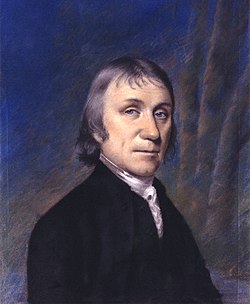
Joseph Priestley and Oxygen


British chemist and clergyman, chemistry of gases pioneer

Quarter-length portrait of a man in a black coat against a purple and blue curtain backdrop.
Joseph Priestley (1733-1804), English clergyman and chemist, one of the discoverers of oxygen, was born on March 13, 1733, in Fieldhead, Leeds. He spent four years at a dissenting academy in Daventry and later became a minister at Needham Market.

Priestley wrote The Scripture Doctrine of Remission, Letters to a Philosophical Unbeliever, and his controversial History of Early Opinions Concerning Jesus Christ (1786.) In 1761, he became a teacher at Warrington Academy. It was during his visits to London that he met Benjamin Franklin who supplied him with books for his History of Electricity published in 1767.

Urbain Jean Joseph Le Verrier


Science/Astronomy Datebook:  March 11

French astronomer and mathematician Urbain J.J. Le Verrier co-discovered planet Neptune


Urbain Jean Joseph Le Verrier (1811-1877), was a French astronomer who co-discovered planet Neptune (with John Couch Adams), was born on March 11, 1811, in St. Lo, Normandy.  He became a teacher of astronomy at the Polytechnique.

Ernest Rutherford: Nuclear Physics Pioneer

Science Datebook: March 11

Baron Ernest Rutherford, Father of Nuclear Physics


Baron Ernest Rutherford (b. August 30, 1871-d. October 19, 1937), was a New-Zealand born British physicist. 

This day on March 11, 1911, Ernest Rutherford is considered the father of nuclear physics, as he published his atomic theory describing the structure of the atom for the first time at the Manchester Literary and Philosophical Society.

He described the atom as having a central positive nucleus surrounded by negative orbiting electrons. His model suggested that most of the mass of the atom was contained in the small nucleus, with the rest of the atom mostly empty space. His conclusion followed what we now know as Rutherford's "gold foil experiment" especially amongst science students and other advocates.

Otto Hahn: Nuclear Fission

Science Datebook: March 8

Otto Hahn discovered nuclear fission


Otto Hahn (1879-1968), German radio chemist and Nobel Prize winner, is born on March 8, 1879, in Frankfurt, Germany, and died July 28, 1968, in Gottingen, Germany. He discovered nuclear fission, in particular, the split of uranium atom into barium and krypton.

Hahn was awarded the 1944 Nobel Prize in chemistry, and shared the 1966 Enrico Fermi Award. He was involved in the discovery of several new radio elements, among them radiothorium, radioactinium and mesothorioum.