Search this Blog

Showing posts with label Films. Show all posts

Casablanca (1942 Film)

Classic Film 

Casablanca's legacy is long-lasting. It is a top rated film on the American Film Institute's 100 best movies, and it is one of the most referenced films of all time. “Casablanca has characters that are both universal and particular to their time,” said Poltergeist screenwriter Michael Grais. “Many of the actors in the film were recent refugees from Nazi Germany. They brought to the movie a realism that was unique.

Film Brief Profile

Casablanca is a 1942 American romantic drama film directed by Michael Curtiz, starring Humphrey Bogart, Ingrid Bergman, and Paul Henreid. Filmed and set during World War II, it focuses on an American expatriate (Bogart) who must choose between his love for a woman (Bergman) or helping her husband (Henreid), a Czech resistance leader, escape from the Vichy-controlled city of Casablanca to continue his fight against the Germans. The screenplay is based on Everybody Comes to Rick's, an unproduced stage play by Murray Burnett and Joan Alison. 

Dooley Wilson, who famously starred as Sam in Casablanca, sang the famous "As Time goes by".    

Casablanca was rushed into release to take advantage of the publicity from the Allied invasion of North Africa a few weeks earlier. It had its world premiere on November 26, 1942, in New York City and was released nationally in the United States on January 23, 1943. 

Humphrey Bogart and Ingrid Bergman

Loving Vincent (Film)


In a story depicted in oil painted animation, a young man comes to the last hometown of painter Vincent van Gogh to deliver the troubled artist's final letter and ends up investigating his final days there.

Loving Vincent is a 2017 animated biographical drama film about the life of Dutch painter Vincent van Gogh, in particular, the circumstances of his death. It is the first fully painted animated feature film. It is a Polish production, funded by the Polish Fil Institute, and partially through a Kickstarter campaign. It was first conceived as a seven minute short movie in 2008. which was idealized by Dorota Kobiela, a painter herself, after studying the techniques and the artist's story through his letters.

The film is said to consist of 65,000 frames, each of them an oil painting on canvas, using the same technique as Van Gogh's, created by a team of 125 painters. The film premiered at the Annecy International Animated Film Festival in 2017.

Soundtrack:  

Lianne La Havas - "Starry Starry Night" (Lving Vincent OST).  "Starry Starry Night" was written by Don McLean and performed by Lianne La Havas for the motion picture "Loving Vincent"


Directors:  Dorota Kobiela, Hugh Welchman
Writers: Dorota Kobiela, Hugh Welchman
Stars: Douglas Booth, Jerome Flynn, Robert Gulaczyk


Film Award:
Loving Vincent won Best Animated Feature Film Award at the 30th European Film Awards in Berlin and was nominated and was nominated for Best Animated Feature at the 90th Academy Awards. 

Video Credit:

BBC piece about Loving Vincent, the world’s first fully painted feature film.  YouTube, uploaded by Sarah Wimperis. Accessed January 21, 2018.

Resources:

Loving Vincent (2017). Imdb.com.  Accessed January 21, 2018
Loving Vincent (Film). en.wikipedia.org. Accessed January 21, 2018.
Loving Vincent. lovingvincent.com. Accessed January 21, 2018. 


(c) 2018.  Tel Asiado.  Inspired Pen Web.  All rights reserved.

Cabaret (Film)

Film / Musical Drama

Superb!

Cabaret is a 1972 American musical drama film directed by Bob Fosse. Starring: Liza Minnelli, Michael York, and Joel Grey.

The film is set in Berlin during the 1931 Weimar Republic, under the presence of the growing Nazi Party. The musical numbers all take place inside the club, with one exception: "Tomorrow Belongs to Me", the only song sung neither by Grey's character of the Kit Kat Klub's Master of Ceremonies nor by Minnelli's character of Sally Bowles.

Liza Minnelli and Joel Grey sing medley from Cabaret


Main Cast:

  • Liza Minnelli as Sally Bowles
  • Michael York as Brian Roberts
  • Helmut Griem as Baron Maximilian von Heune
  • Joel Grey as Master of Ceremonies
  • Fritz Wepper as Fritz Wendel
  • Marisa Berenson as Natalia Landauer


Brief Plot Summary:

In Berlin in 1931, American cabaret singer Sally Bowles (Liza Minnelli)  who performs at the Kit Kat Club meets British reserved academic and writer Brian Roberts (Michael York), who is finishing his university studies. Despite Brian's confusion over his sexuality, the pair become lovers, but the arrival of the wealthy and decadent playboy Maximilian von Heune (Helmut Griem) complicates matters for them both. This love triangle plays out against the rise of the Nazi party and the collapse of the Weimar Republic.

 
Sally learns that she is pregnant but is unsure of the father. Brian offers to marry her and take her back to his university life in Cambridge. At first, they celebrate their resolution to start this new life together, but after a picnic between Sally and Brian, in which Brian acts distant and uninterested, Sally becomes disheartened by the vision of herself as a bored faculty wife washing dirty diapers. Ultimately, she has an abortion, without informing Brian in advance. When he confronts her, she shares her fears, and the two reach an understanding. Brian departs for England, and Sally continues her life in Berlin, embedding herself in the Kit Kat Club.

The Wizard of Oz (Film)

CLASSIC MOVIE  / Datebook: September 27

The film popularised the uplifting song "Over the Rainbow" beautifully sung by Judy Garland

The 1939 American musical fantasy film The Wizard of Oz was produced by Metro-Goldwyn-Mayer (MGM). It was directed primarily by Victor Fleming. The songs were written by Edgar "Yip" Harburg (lyrics) and Harold Arlen (music). The musical score and the incidental music were composed by Stothart. Widely considered to be one of the greatest films in American history, it is the best-known and most successful adaptation of L. Frank Baum's 1900 children's book, The Wonderful Wizard of Oz. It stars Judy Garland as Dorothy Gale, alongside other stars, and with Terry (as Toto).

The Wizard of Oz best scenes, YouTube uploaded by Movieclips. Accessed September 27, 2025. 


Playlist:

 The Wizard of Oz (1939 Movie, with Judy Garland). By Movieclips: 


The Wizard of Oz is an icon of American popular culture, nominated for six Academy Awards, including Best Picture, but lost to Gone with the Wind. It won in two other categories, including Best Original Song for "Over the Rainbow" and Best Original Score by Herbert Stothart.

The 1956 broadcast television premiere of the film on the CBS network reintroduced The Wizard of Oz (film) to the wider public and eventually made the presentation an annual tradition, making it one of the best known films in movie history. The film was named the most-viewed motion picture on television syndication by the Library of Congress, which also included it in its National Film Registry in 1989. Designation on the registry calls for efforts to preserve it for being "culturally, historically, and aesthetically significant."


Resource:

The Wizard of Oz (1939 Film). en.wikipedia.org. Accessed September 27, 2010.


(c) September 2010. Updated August 27, 2025. Tel. Inspired Pen Web. All rights reserved.

Top 50 Greatest Biographical Movies (Biopics)


Films / Biographical Movies


A biopic, or a biographical movie, is a film that deals with the story of a well known person or group of people in history. Here's website containing a list of 50 films considered the greatest  biopics of all time as this time of posting.


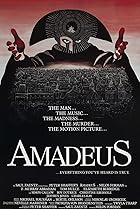
1. Amadeus (1984)


The life, success and troubles of Wolfgang Amadeus Mozart, as told by Antonio Salieri, the contemporaneous composer who was insanely jealous of Mozart's talent and claimed to have murdered him. The story is set in Vienna, Austria, during the latter half of the 18th century, and is a fictionalized story of Wolfgang Amadeus Mozart from the time he left Salzburg, described by its writer as "fantasia on the theme of Mozart and Salieri". Mozart's music is heard extensively in the soundtrack of the film. Winner of 8 Academy Awaards (1984).

2. Gandhi (1982)

Gandhi's character is fully explained as a man of nonviolence. Through his patience, he is able to drive the British out of the subcontinent. And the stubborn nature of Jinnah and his commitment towards Pakistan is portrayed.

3. Lawrence of Arabia (1962)

The story of T.E. Lawrence, the English officer who successfully united and led the diverse, often warring, Arab tribes during World War I in order to fight the Turks.

4. Malcolm X (1992)

Biographical epic of the controversial and influential Black Nationalist leader, from his early life and career as a small-time gangster, to his ministry as a member of the Nation of Islam.

5. Schindler's List (1993)

In German-occupied Poland during World War II, industrialist Oskar Schindler gradually becomes concerned for his Jewish workforce after witnessing their persecution by the Nazis.

Charade (Film)

Classic Movies / Charade 


Charade is a 1963 Technicolor American romantic comedy/mystery film directed by Stanley Donen, written by Peter Stone and Marc Behm, and starring Cary Grant and Audrey Hepburn. The cast also features Walter Matthau, James Coburn, George Kennedy, Dominique Minot, Ned Glass, and Jacques Marin. It spans three genres: suspense thriller, romance and comedy. Because Universal Pictures published the movie with an invalid copyright notice, the film entered the public domain in the United States immediately upon its release.


The movie is based on The Unsuspecting Wife (1961) short story by Peter Stone and Marc Behm. Music is by Henry Mancini.

Harassed by three men who had a linkage to her late husband's murder, Reggie seeks help from Joshua who confesses that he is the brother of the fourth accomplice in the crime. Will she trust him?


Video Credit:

Charade (1963) Cary Grant, Audrey Hepburn. Hollywood Movies. Uploaded by Cinecurry. Accessed August 8, 2018

Resources:

Charade (Film). en.wikipedia.org
Charade (Film). Turner Classic Movies. 


(c) August 2008. Updated August 8, 2018. Tel. Inspired Pen Web. All rights reserved.

Sea Wolves and Precious Moments

Film / Film Music:  The Sea Wolves / Precious Moments 


Special Tribute:  
In heartfelt remembrance of Sir Roger Moore who passed away today, May 24, 2017 (Sydney time). James Bond 007,  Simon Templar of "The Saint", Lord Brett Sinclair of "The Persuaders," and more... Rest in Peace,  Sir Roger Moore, and with much gratitude, thank you for all the joys and excitement you've provided in the comfort of the living room.


Below is a video of the popular song "Precious Moments" sung by Matt Monro, (lyrics by Leslie Bricusse and composed by Richard Addinsell), from the film The Sea Wolves staring Gregory Peck, Roger Moore and David Niven.


The Sea Wolves (Film), Briefly: 

The Sea Wolves is a 1980 war film.  It is atrue WW2 story: the British must attack a German ship but it's safe in neutral Goa. So they send civilians, ex-soldiers about 60 years old.

The film is based on the book Boarding Party by James Leasor, which itself is based on a real incident that took place in World War II. The incident involved Operation Creek, the Calcutta Light Horse's covert attack on 9 March 1943 against a German merchant ship, which had been transmitting information to U-boats from Mormugão Harbour in neutral Portugal's territory of Goa.


Video Credit:

The Sea Wolves (1980).  YouTube, uploaded by yorkie78.  Accessed May 24 2017.


Resources:

The Sea Wolves.  en.wikipedia.org.  Accessed May 24, 2017.

The Sea Wolves (1980). IMdb.  Accessed May 24, 2017.


(c)  2017-2018.  Tel Asiado.  Written for Inspired Pen Web.  All rights reserved.

Goodbye Again (Film)

Classic Movie


The film Goodbye Again was released in Europe as Aimez-vous Brahms?, adapted from a novel by Francoise Sagan, first published in French in 1959, and published in English the following year. In 1961, it was made into a romantic drama film under the title Goodbye Again, produced and directed by Anatole Litvak. The screenplay was written by Samuel A. Taylor. The film, released by United Artists, stars Ingrid Bergman, Anthony Perkins, Yves Montand, and Jessie Royce Landis.


Brief Plot

Paula Tessier (Ingrid Bergman) is a beautiful and highly successful 40-year-old interior designer who for the past five years has been the mistress of Roger Demarest (Yves Montand), a very charming  "philandering business executive" who loves Paula but is too selfish to give up his freedom to be promiscuous. He refuses to stop seeing other women. When Paula meets Philip (Anthony Perkins), the 24-year-old immature lawyer son of one of her wealthy clients, he falls hopelessly in love with her and insists that the age difference will not matter. Paula resists the young man's advances, but finally succumbs when Roger initiates yet another affair with one of his young Maisies. While she is initially happy with Philip, her friends and business associates disapprove of the romance.


Soundtrack 

Johannes Brahms Symphony No.3, in F. major, Op.90, III. Poco allegretto, YouTube, uploaded by uenenum. Accessed , accessed May 7, 2021. (Orchestra of the University of Music Franz Liszt Weimar, 2012.)

History of Films and Cinemas

Pre-Eastman Pioneers and Innovators


A nutshell history of films and cameras, including the early movie innovators and pioneers before Eastman are highlighted. When the celluloid film rolls were produced by American George Eastman of Kodak Company the motion picture became possible.

When the celluloid film rolls were produced by American George Eastman of Kodak Company the motion picture became possible. Earlier film innovators and pioneers before Eastman are also highlighted.

Mozart's Sister Film by Rene Feret

Film / Mozart's Sister

Wolfgang Amadeus Mozart had an older sister, Maria Anna Mozart, "Nannerl" to her family.  Mozart’s Sister is a film accounting of her early life and the reasons why she abandoned her own career as a musician, composer and singer; instead, devoting her life to supporting her brother as dictated by their father, Leopold.

Maria Anna "Nannerl" Mozart was three years older than her brother Wolfgang Amadeus who adored his sister.  Much has been written and told of the early life of child prodigy Wolfgang Amadeus. His elder sibling, Maria Anna, affectionately known to her family as "Nannerl," was a gifted musician, composer and singer in her own right.

La Famille Bélier: French Comedy-Drama Film

The Bélier Family French Film Review


Here are two of my favourite reviews for La Famille Bélier film: One is written for Sydney Morning Herald by Paul Byrnes, who describes it as a "charm and a knockout finale carry French comedy to the end" and the other, written for  SBS by Rochelle Siemienowicz, the film as "A mix of sensitivity and rude exuberance."   

The Official Trailer:


La Famille Bélier (English: The Bélier Family) is a French comedy-drama film directed by Eric Lartigau in 2014.  It received six nominations at the 40th Cesar Awards, with Louane Emera (Paula, the 16 year-old daughter) winning the Most Promising Actress Award.

Whistle Down the Wind (Film)


Film / Whistle Down The Wind

Whistle Down the Wind is a 1961 British crime film directed by Bryan Forbes, and adapted by Keith Waterhouse and Willis Hall based on the 1959 novel of the same name by Mary Hayley Bell. The film stars her daughter, Hayley Mills, who was nominated for the BAFTA Award for Best British Actress and an Academy Juvenile Award for Walt Disney's Pollyanna (1960).

Blurb

After a confusing exchange with a strange man (Alan Bates) the Bostock children find hiding in their family barn, Kathy Bostock (Hayley Mills) and her young siblings jump to the conclusion that the man -- in reality an escaped killer -- is none other than Jesus Christ. Excitement erupts as word spreads among the children in their small farming community in northwest England. Adult skepticism abounds, until their father (Bernard Lee) catches wind of the tale and begins to investigate.

In 2005, the British Film Institute included it in their list of the 50 films you should see by the age of 14.

  • Genre: Drama

  • Original Language: English

  • Runtime:


The Plot

The plot follows the lives of three Lancashire farm children who discover a bearded fugitive (the Man/Arthur Blakey) hiding in their barn and mistake him for Jesus Christ. They come to this conclusion because of their Sunday School stories and Blakey's shocked exclamation of 'Jesus Christ!' when the eldest child accidentally discovers him. Blakey—initially confused about why the three Bostock children are eager to protect him from adult discovery—makes no attempt to correct their mistake, especially when he discovers the eldest child, Kathy, is determined to keep him hidden from the local police, despite the posters circulating in the nearby town that reveal he is wanted for murder. 

Most of the children in the community eventually find out that Blakey/'Jesus' is living in the Bostocks' barn, complicating Kathy's task. When the secret finally reaches Mr. Bostock (Kathy's father), the police are called in to apprehend the criminal. 

The children of the village, now in on the secret, converge on the barn. Convinced that she has failed Jesus, Kathy sneaks behind the barn and apologizes to Blakey for being unable to protect him. He forgives her and, after much prompting from her, promises she will see him again. Resigned to his fate, Blakey tosses his handgun out of the barn door and surrenders to the police. 

Once Blakey is taken away and the crowd disperses, Kathy is approached by two very young children who ask to see Jesus. She tells them that they missed him this time, but he will be back one day.

Production (Briefly)

The novel was published in 1959. Mary Hayley Bell (Lady Mills) based her novel of the three children on her own children, including Hayley Mills. The novel was turned into a stage play prior film rights were bought by Bryan Forbes and Richard Attenborough, who had moved into film production. They were friends of Hayley's parents (Sir John Mills and Mary Bell) and secured Hayley Mills to play the lead. She had just made Pollyanna for Disney.
 
The film contrasts the children's innocent faith with the pragmatic and suspicious adults in the town. It is heavy in allegory as many of the characters and events parallel those found in historical Christian literature. In one scene, a child is mocked and beaten into denying he had seen Jesus. After the boy's third denial, a train whistle is heard (representing Peter's denial in Luke 22). The strains of 'We Three Kings' can be discerned in the score as Kathy, her brother and sister march with the food 'gifts' they have acquired for the man in the 'stable'. They are spotted and followed by a group of country children (shepherds). The early core of children who are in on the secret number a dozen and are specifically called the Disciples in the film credits. The secret comes out at the end of a children's party (Last Supper). When apprehended, Blakey is immediately frisked by police; his arms outstretched at his sides, a clear reference to the Crucifixion. 

Alan Bates, in his first starring film role, played the man in the barn. Local schoolchildren from the Lancashire villages around Burnley and Clitheroe were used as extras; children from Chatburn Primary School played the 'disciples'. The theme music by Malcolm Arnold became a classic.   (Sorry, the film video is no longer available at YouTube. / noted: February 22, 2025)


The Casting and Crew of Whistle Down the Wind
  • Stars: Hayley Mills (Kathy Bostock), Alan Bates (The Man), Bernard Lee (Mr. Bostock), Norman Bird (Eddie), Elsie Wagstaff (Auntie Dorothy), Diane Holgate (Nan Bostock), Ronald Hines (Thurstow), Gerald Sim (Detective), Diane Clare (Sunday School Teacher), John Arnatt (Superintendent Teesdale), Hamilton Dyce (The Vicar), Howard Douglas (The Vet) 

  • Bryan Forbes - Director

  • Richard Attenborough - Producer

  • Keith Waterhouse, Willis Hall - Screenwriter

  • Mary Hayley Bell - Writer

  • Malcolm Arnold - Music

  • Max Benedict - Film Editing

  • Arthur Ibbetson - Cinematographer

Production company was Beaver Pictures, distributed by J. Arthur Rank Film Distributors. 

Release date: July 20, 1961 (London)


Musical Adaptations

In 1984, rock group Toto used the plot of the film for their music video 'Stranger in Town'. The song is on their album Isolation

In the late 1980s, Russell Labey and Richard Taylor adapted the film into a musical of the same name for the National Youth Music Theatre. 

Andrew Lloyd Webber and Jim Steinman later created a more commercial adaptation. Highlight songs from their musical version are 'Vaults of Heaven', 'Whistle Down the Wind', and 'No Matter What', which became a very successful Boyzone hit.

(Video: Whistle Down the Wind in Bryan Forbes 1961 Film, Part 1/2, Part 2/2, starring Hayley Mills & Alan Bates. YouTube, uploaded by Miirdza. Accessed February 17, 2019.) Music: the folksong "Donna, Donna, Donna" violin & piano.

Film Reception

The film had its World Premiere at the Odeon Leicester Square on July 20, 1961. It played there for 3 weeks, ending its run on August 9, three days after it began its general release in the London area.

The film was favourably reviewed upon its original release, including praise from The New York Times. The film was nominated for four BAFTA (British Academy of Film and Television Arts) awards:
  • Best British Actress, Hayley Mills
  • Best British Film, Bryan Forbes
  • Best British Screenplay, Keith Waterhouse and Willis Hall
  • Best Film from any Source, Bryan Forbes

By September 1961 Rank were reporting the film was "exceeding expectations" commercially. The film was the 8th most popular film at the UK box office in 1961. Others popular at the time included Swiss Family Robinson, Saturday Night and Sunday Morning, Carry on Regardless, The Rebel and The Long and the Short and the Tall.

By 1971, it had earned a profit of over £240,000. Bryan Forbes later said it was the most popular and profitable film he ever made.

In 2005, the British Film Institute included it in their list of the 50 films you should see by the age of 14.

Image Credit:

Whistle Down the Wind Poster. From en.Wikipedia.org. Note for fair use: The poster is derived from a digital capture (photo/scan) of the Film Poster (creator of this digital version is irrelevant as the copyright in all equivalent images is still held by the same party). Copyright held by the film company or the artist. Claimed as fair use regardless. Accessed July 23, 2023.

Video Credit:

Whistle Down the Wind. YouTube, uploaded by Yami BazFM. Accessed July 23, 2023.  

Resources:
 
Whistle Down the Wind (Film).  en.wikipedia.org.  Accessed April 30, 2013
Whistle Down the Wind. IMDb. Accessed April 30, 2013
Whistle Down the Wind. (Plus on-going reviews)   RottenTomatoes.com.  Accessed April 30, 2013


(c)  July 2013. Updated July 23, 2023. Tel. Inspired Pen Web.  All rights reserved.

West Side Story (Musical)

Music Drama/Films/Musicals 


West Side Story is a musical with a book written by Arthur Lautents, music by Leonard Bernstein, and lyrics by Stephen Sondheim, and conception and choreography by Jerome Robbins. It was inspired by William Shakespeare's famous play Romeo and Juliet.  The story focuses on social problems and  marked a turning point in American musical theatre.

The story is set in the Upper West Side in New York City in the mid-1950s, in an ethnic, blue-collar neighbourhood. The musical explores the rivalry between the Jets and the Sharks, two teenage street gangs of of different ethnic backgrounds. The members Sharks, from Puerto Rico, are taunted by the Jets, a white gang. The young protagonist, Tony, a former member of the Jets and best friend of Riff, the gang's leader, falls in love with Maria, the sister of Bernardo, the leader of the Sharks. The dark theme, sophisticated music, extended dance scenes.

Bernstein's score for the musical includes  "Something's Coming,: "Maria," "America," "Somewhere," "Tonight," "Jet Song," "I Feel Pretty," "A Boy Like That," "One Hand, One Heart," "Gee, Officer Krupke," and "Cool."

Version conducted by Bernstein himself, published on January 5, 2012. Performed with the Israel Philharmonic Orchestra. The Symphony Hall, Osaka, 1985.


None but the Lonely Heart (Film)

Classic Movies


None but the Lonely Heart is a 1944 American drama romance film. It tells the story of an itinerant  young Cockney drifter who reluctantly returns home with no ambitions, but finds that his family needs him. He helps his sickly mother run her shop. To make ends meet, they are both tempted to turn to crime.


The movie stars Cary Grant, Ethel Barrymore, and Barry Fitzgerald. It is adapted by director Clifford Odets from the novel by Richard Llewelyn.


Film Trailer (1944)


17th Academy Awards:

Ethel Barrymore wins the Best Actress in a Supporting Role. Nominations for Cary Grant, Best Actor; Roland Gross, Best Film Editing; Hanns Eisler and Constantin Bakaleinikoff, for Best Music (Music Score of a Dramatic or Comedy Picture).


The film title None but the Lonely Heart is taken from one of Piotr Ilyich Tchaikovsky's loved and best-known popular heart-rending music of the same title, "None but the Lonely Heart, Op. 6 No.6," featured in the background music.


Tiger Bay (1959 Film)

Brilliant and touching movie. Terrific watch. Awesome acting from the three main characters: Sir John Mills (Police Superintendent Graham), Horzt Bucholz (Bronislav Korchinsky, a professional Polish seaman), and Hayley Mills in her debut performance as a child actress (Gillie, a tomboyish, wayward young girl). 

An excellent crime thriller. Exactly why old films are unmatched and remain so. Those moments before the ending are great, showing the bond between Bronislav Korchinsky, (guilty of murder) and the girl Gillie.

Tiger Bay is a 1959 British crime drama film based on the short story "Rodolphe et le Revolver" by Noël Calef. It was directed by J. Lee Thompson, produced by John Hawkesworth, and co-written by John Hawkesworth and Shelley Smith (pseudonym of Nancy Hermione Bodington). It stars John Mills as a police superintendent investigating a murder; his real-life daughter Hayley Mills, in her debut performance, her first major film role, as a girl who witnesses the murder; and Horst Buchholz as a young sailor who commits the murder in a moment of passion. Unusually the overall ambience is one of sympathy towards the killer, seeing him as a basically good person, and victim of circumstance.

The film was shot mostly on location in the Tiger Bay district of Cardiff, at Newport Transporter Bridge in Newport (12 miles/19 km from Cardiff) and at Avonmouth Docks in Bristol. It features many authentic scenes of the children's street culture and the black street culture of the time, along with many dockside shots and scenes in real pubs and the surrounding countryside. The name 'Tiger Bay' was used by sailors, as a slang term for docklands that were rough and infamous areas. The Bay was also home for many people including newcomers who married Welsh inhabitants, creating a melting-pot of foreign and Welsh culture.  

Video. Tiger Bay 1959 John Mills, Horst Buchholz & Hayley Mills. Youtube, uploaded by DK Classics. Accessed April 18, 2008.