}

Search this Blog

Showing posts with label Inventors. Show all posts

David E. Hughes and Carbon Microphone


Inventor of Carbon Microphone


English-born American David Edward Hughes is widely agreed as the inventor of the carbon microphone, a device important in the development of telephony. He also invented the induction balance for metal detectors and the printing telegraph system.

David Hughes was born in London, England on May 16, 1831. At the age of seven, he moved to the United States with his Welsh parents. In 1850, he became a music professor in Kentucky at the college of Bardstown. He later became a natural philosophy professor in the same school. Hughes only spent four years in the academic field, from where he began working on various devices, such as the type-printing telegraph and carbon microphone.

Thomas Wedgwood

Science Datebook: May 14

Photography Pioneer


Dubbed as godfather of photography, Thomas Wedgwood, born on May 14, 1771,  in Etruria, Staffordshire, England, is credited with his major contribution to photography and technology. He is considered the first man to develop a method to copy visible images chemically to permanent media.  He was the son of a potter, Josiah Wedgwood, a potter and an early experimenter with Sir Humphry Davy in photography.

Samuel Morse and His Code


This inventor gave us the famous Morse Code


American inventor Samuel (Finley Breese) Morse was born on April 27, 1791, in Charlestown, Massachusetts. Aside from being an inventor, he was also an artist. From 1832, Morse experimented on a practical system of using electricity to send messages by telegraphy.  He developed the Morse Code to simplify the system. In 1844, Morse sent the message "What God hath wrought?" from Washington to Baltimore. He collaborated with Cyrus Field in laying the first transatlantic cable.

Theobald Böhm (Boehm): Flute Inventor


Theobald Böhm or Boehm (April 9, 1794 – November 27, 1881) was a German inventor and Bavarian court musician. He is credited for inventing the Western concert flute and its improved fingering system known as the "Boehm System."

Boehm was a virtuoso flautist and composer for the flute. He was born in Munich, Bavaria. He learned goldsmithing through his father's trade. He made his own flute and played in an orchestra at the aged of 18. At 21, he became the first flautist in the Royal Bavarian Orchestra.

John Philip Holland


 Irish engineer, father of modern submarine who designed and developed the submarine, the first underwater vessel


File:Seán Ó Maolchalann.jpgJohn Philip Holland (29 February 1840 – 12 August 1914), was an Irish engineer who designed and built the first submarine formally commissioned by the U.S. Navy, and the first Royal Navy submarine, the Holland 1.

He was a school teacher in Ireland, his country of birth but in 1873, emigrated in New Jersey, USA. In 1875, he offered a submarine design to the US navy but it was rejected as not practicable. Despite this rejection, he continued his experiments.

Alessandro Volta


Science Dateline: February 18

Physicist Alessandro Volta, inventor of the battery


Alessandro (Giuseppe Antonio Anastasio) Volta was an Italian physicist known for the invention of the battery. He was born on February 18, 1745,  in Como, a town in present-day northern Italy near the Swiss border.

In 1774, he became a professor of physics at the Royal School in Como. He improved and popularized the electrophorus, a device that produced static electricity. He is often credited with its invention although a machine operating on the same principle was described in 1762 by Johan Wilcke, a Swedish experimenter.


Volta's Works


Volta studied the chemistry of gases between the years 1776-78. He discovered methane after reading a paper by Benjamin Franklin on "flammable air." In November, 1776, he found methane at Lake Maggiore. After two years he isolated it.

William Shockley


American Physicist, Inventor, and Nobel Laureate


William Bradford Shockley Jr. (February 13, 1910 – August 12, 1989), was an American physicist and inventor. He co-invented the transistor, along with John Bardeen and Walter Houser Brattain. All three were awarded the 1956 Nobel Prize in Physics.

Shockley's attempts to commercialize a new transistor design in the 1950s and 1960s led to California's "Silicon Valley" becoming a hotbed of electronics innovation. In his later life, he was a professor at Stanford and became a strong advocate of eugenics.

Inventor Thomas Alva Edison

Science / Inventions Dateline: February 11

Profiles Thomas Alva Edison, American inventor of gramophone who laid foundation of electric lighting lamp, and electronics through "Edison Effect."


Thomas Alva Edison (b. 1847-d.1931), was born on February 11, 1847,  in Milan, Ohio. Edison was the most productive American inventor of his day, receiving more than a thousand patents for applications of scientific principles. Also a businessman, he developed many devices that greatly influenced life around the world, including the phonograph, the motion picture camera, and a long-lasting, practical electric light bulb.

Dubbed "The Wizard of Menlo Park", he was one of the first inventors to apply the principles of mass production and large-scale teamwork to the process of invention, and because of that, he is often credited with the creation of the first industrial research laboratory.

Benjamin Franklin

Famous Birthdays Datebook: January 17

American diplomat and statesman, one of America's greatest inventors
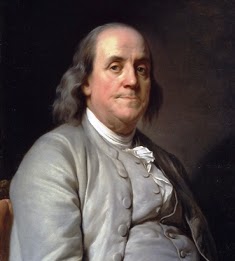

Benjamin Franklin was born on January 17, 1706, in Boston, Massachusetts Bay. He was one of the Founding Fathers of the United States. A world-renowned polymath, he was a leading author, printer, political theorist, politician, postmaster, scientist, inventor, civic activist, statesman, and diplomat. He published the popular and witty Poor Richard's Almanac. He made a number of inventions, and initiated a great many improvements in Philadelphia, including a fire company, a university, and a library. He facilitated many civic organizations.

As a scientist, he was a major figure in the American Enlightenment and the history of physics for his discoveries and theories regarding electricity. As an inventor, he is known for the  lightning rod, bifocals, and the Franklin stove, among other inventions. 

Franklin earned the title of "The First American" for his early and indefatigable campaigning for colonial unity; as an author and spokesman in London for several colonies, then as the first United States Ambassador to France, he exemplified the emerging American nation. He was foundational in defining the American ethos as a marriage of the practical values of thrift, hard work, education, community spirit, self-governing institutions, and opposition to authoritarianism both political and religious, with the scientific and tolerant values of the Enlightenment.

Always proud of his working class roots, Franklin became a successful newspaper editor and printer in Philadelphia, then the  leading city in the colonies. He became wealthy publishing Poor Richard's Almanac and The Pennsylvania Gazette. He was also the printer of books for the Moravians of Bethlehem, Pennsylvania. 

As a statesman, Benjamin Franklin helped draft and sign the American Declaration of Independence. He was also one of the signatories of the peace treaty in Paris, France, that ended the Revolution.  As a statesman, Franklin represented Philadelphia at the Albany Congress, where he proposed that the colonies unite under an elected council, among others. He spent many years in England as a diplomat before the American Revolution, in an attempt to reconcile differences between Britain and the colonies.  From 1785 to 1788, he served as Governor of Pennsylvania. Toward the end of his life, he freed his own slaves and became one of the most prominent abolitionists.

As an accomplished diplomat, he was admired among the French as American minister to Paris and was a major figure in the development of positive Franco-American relations. His efforts in supporting the American Revolution by shipments of crucial munitions proved vital for the American war effort. He was the British postmaster for the colonies for many years, which enabled him to set up the first national communications network. He became a national hero in America when as agent for several colonies he spearheaded the effort to have Parliament in London repeal the unpopular Stamp Act.

As an educator, Franklin played a major role in establishing the University of Pennsylvania and was elected the first president of the American Philosophical Society.

Franklin died on April 17, 1790, in Philadelphia, Pennsylvania). His colorful life and legacy of scientific and political achievement, and status as one of America's most influential Founding Fathers, have seen Franklin honored with cultural references, on coinage and the $100 bill; warships, names of towns, counties, educational instiiitutions, and companies.


Resources:


Benjamin Franklin: Glimpses of the Man. Franklin Institute. Accessed January 17, 2012

Benjamin Franklin. History: American Revolution. Accessed January 17, 2012 

Brands, H.W.  The First American: The Life and Times of Benjamin Franklin (2010) 

The Electric Ben Franklin. www.ushistory.org/franklin/info/. Accessed January 17, 2012


Image Credit:

Benjamin Franklin. National Portrait Gallery. en.wikipedia.org. Public Domain

(c) Tel Asiado.  Written for InspiredPenWeb.com.  All rights reserved. 

History of Swiss Army Knife


The Swiss army pocket knife is a little red and silver knife, beautifully designed, with knives, scissors, corkscrews, screwdrivers, can-openers and many more surprises slotted into its sleek chassis. It's a brainchild of Swiss cutler Karl Elsener who was financially ruined before becoming one of the world's icons.

It was 1884. After completing an apprenticeship as a cutler in Tuttlingen, Germany, Karl Elsener returns home to Ibach, in Switzerland. The 24 year old son of a milliner had his big idea. The Swiss army was being supplied with knives from the German town of Solingen. At the time, the Swiss economy was extremely unhealthy, and local lads regularly left their but mountainous nation to find jobs elsewhere. Elsener hoped to supply the army with locally-made knives and to create new jobs in the process.

Preferring not to build a factory, the enterprising Elsener formed the Swiss Cutlers' Association, gathering twenty-five other cutlers to produce knives for the army. These knives contained a blade, punch, can-opener and screwdriver.

George Westinghouse

Science / Inventors Datebook: October 6

American engineer, inventor, and pioneer of the electrical company.


George Westinghouse, Jr. (October 6, 1846 – March 12, 1914) was an American engineer and entrepreneur who invented the railway air brake and was a pioneer of the electrical industry. He was also one of Thomas Alva Edison's rivals in the early implementation of the American electricity system. Westinghouse's system, which used alternating current based on the extensive research by Nikola Tesla, eventually prevailed over Edison's insistence on direct Current.

In 1911, Westinghouse received the AIEE's Edison Medal "For meritorious achievement in connection with the development of the alternating current system."

Eastman Kodak in Camera

The Invention: Eastman Kodak in Cameras  

Although cameras have been in use since the 17th century, the Kodak came about in 1888,  invented by George Eastman. Kodak  is a dry, transparent, and flexible, photographic film or rolled photography film made of celluloid.  It was the first rolled-film for camera used in Kodak cameras that we know, and most likely, have used a lot prior the proliferation of the latest digital cameras.

Eastman's roll-film was made by the Eastman Dry Plate Company in Rochester, New York, USA.  The Kodak became the most popular camera that time.  Eastman invented the famous phrase, "You press the button, we do the rest."  What this meant was:  all that owners of Kodak camera had to do was shoot all the negatives and mail the camera back to Eastman factories, and technicians were ever ready to develop the pictures.  At the height of Kodak's popularity, practically everyone tried to afford one.

Medical Discoveries and Inventions

Discoveries and inventions that provide doctors and other medical specialists treat our illnesses and diseases.


X-rays. Discovered by Wilhelm Conrad Röntgen in 1895 when he found an image had been cast by his cathode ray tube generator.

Magnetic Resonance Imaging (MRI).  Method of seeing inside the body for medical purposes.  Raymond Damadian invented the first MRI scanner in 1970. The first full body image taken with an MRI machine was in 1977.  American scientist Paul Lauterbur contributed to the MRI machine success.

Carbolic Acid for sterilization, forerunner of antiseptic.  In 1865, Joseph Lister found that cleaning the operating theatre with carbolic acid helped maintain a sterilized area. This was the forerunner of the antiseptic. The now famous Listerine; solution is named after Lister.

Aspirin (USAN) salicylate drug. It is also known as acetylsalicylic acid, often used as analgesic to relieve minor aches and pains, an anti-inflammatory medication, and an antipyretic to subside fever. It was first isolated by Felix Hofmann in 1899, when he saw that his father use salicylic acid, the main metabolite or ingredient in aspirin, to help his rheumatism.

CAT-scan machine. This machine can take 3D X-rays. Godfrey Hounsfield and Allan Cormack individually worked on the idea of the CAT-scan sometime in 1972. In 1975, X-ray technology helped Robert Ledley patent the CAT-scan which scans 3D X-rays.

Positron Emission Tomography (PET).  It is a scanning machine that can see inside the human body and brain. Designed by Michael Phelps and Edward Hofman in 1974, what the machine does is read electrons and positrons to produce images.


Source:

1001 Cool Inventions by Ben Ripley. Vic, Australia: Hinkler Books P/L. 2006


(c) 2011. Tel Asiado. Written for InspiredPenWeb.com. All rights reserved. 

Heinrich Goebel and his Light Bulb


The Incandescent Light Bulb of Göbel (or Goebel)


It is likely that when we talk light bulb we think Thomas Alva Edison, often attributed as its inventor. Today it is an accepted fact that Heinrich Goebel built functional bulbs three decades earlier. Many others also contributed to the development of a practical device for the production of electrically generated lighting.

Inventor Heinrich Göbel, later Henry Goebel (April 20, 1818 – December 4, 1893), was a precision mechanic born in Springe, Germany. In 1848, he emigrated to New York City and lived there until his death in December 4, 1893. He changed his nationality in 1865.